A pet red light device should be specified around the animal, the handler and the cleaning routine. LED count alone cannot tell a buyer whether a product will fit a dog comfortably, remain in position or be practical between appointments. For brands building a veterinary or pet-care range, those everyday details belong in the product brief before the first sample is ordered.
HSY's catalogue illustrates several ways to package light-based equipment for animal care: body-fitting devices, handheld units, enclosures and mats. Each creates a different interaction. The useful starting question is: who positions the product, where does the animal stay, and what must happen before the next use?
Choose one clearly defined handling scenario for the first product. Validate fit, controls, cleaning and storage together, then expand the range using what the sample evaluation reveals.
01 — Workflow
Start with the handler's job
Picture the complete routine rather than a product photograph. A professional may need to position equipment, observe the animal, change a setting and clean the surface between appointments. A pet owner may need clearer setup instructions, fewer accessories and a storage arrangement that keeps cables organized.
Write that routine as a short sequence: unpack, inspect, position, operate, stop, clean and store. Identify which steps require two hands and where the controller remains visible. This exercise often exposes awkward connectors or unclear instructions before tooling decisions become expensive.
Define the animal category precisely. “For pets” leaves too much unresolved: body size, shape, coat and tolerance of handling all affect the design brief. A product developed around one dog-size range should not automatically be presented as suitable for every companion animal.
02 — Format
Match the physical format to the routine
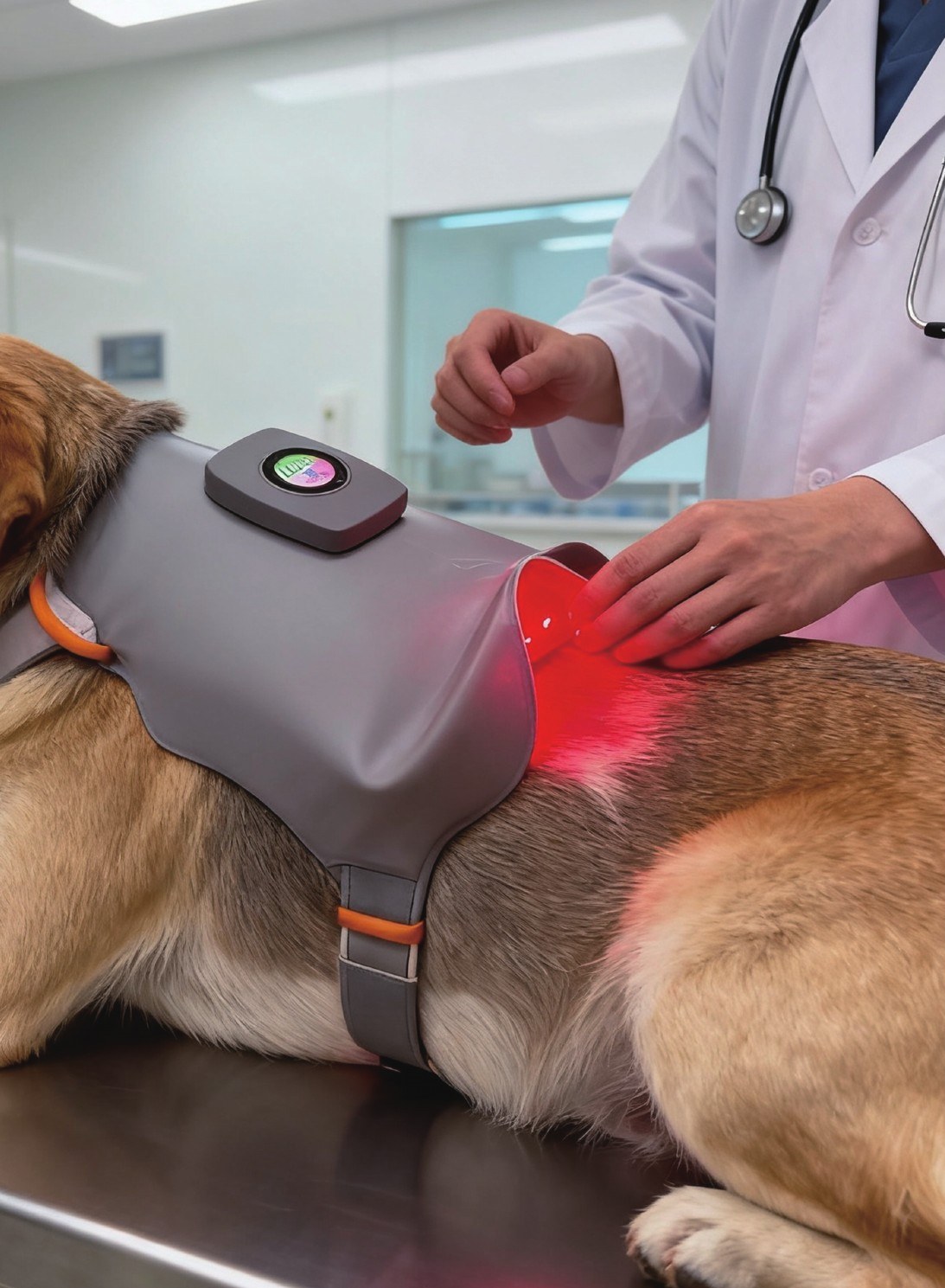
Body-fitting devices: positioning comes first
The catalogue shows HSY-PET2001, HSY-PET2002 and HSY-PET2003 with different outlines and fastening arrangements. For this format, request dimensioned drawings that separate the overall material size from the illuminated area. Define adjustment range, controller position and how the fastening can be released.
During evaluation, inspect whether edges fold, straps migrate or the controller presses against the animal. Product photographs illustrate a concept; they cannot establish fit across breeds and sizes.
Handheld devices: include operator effort
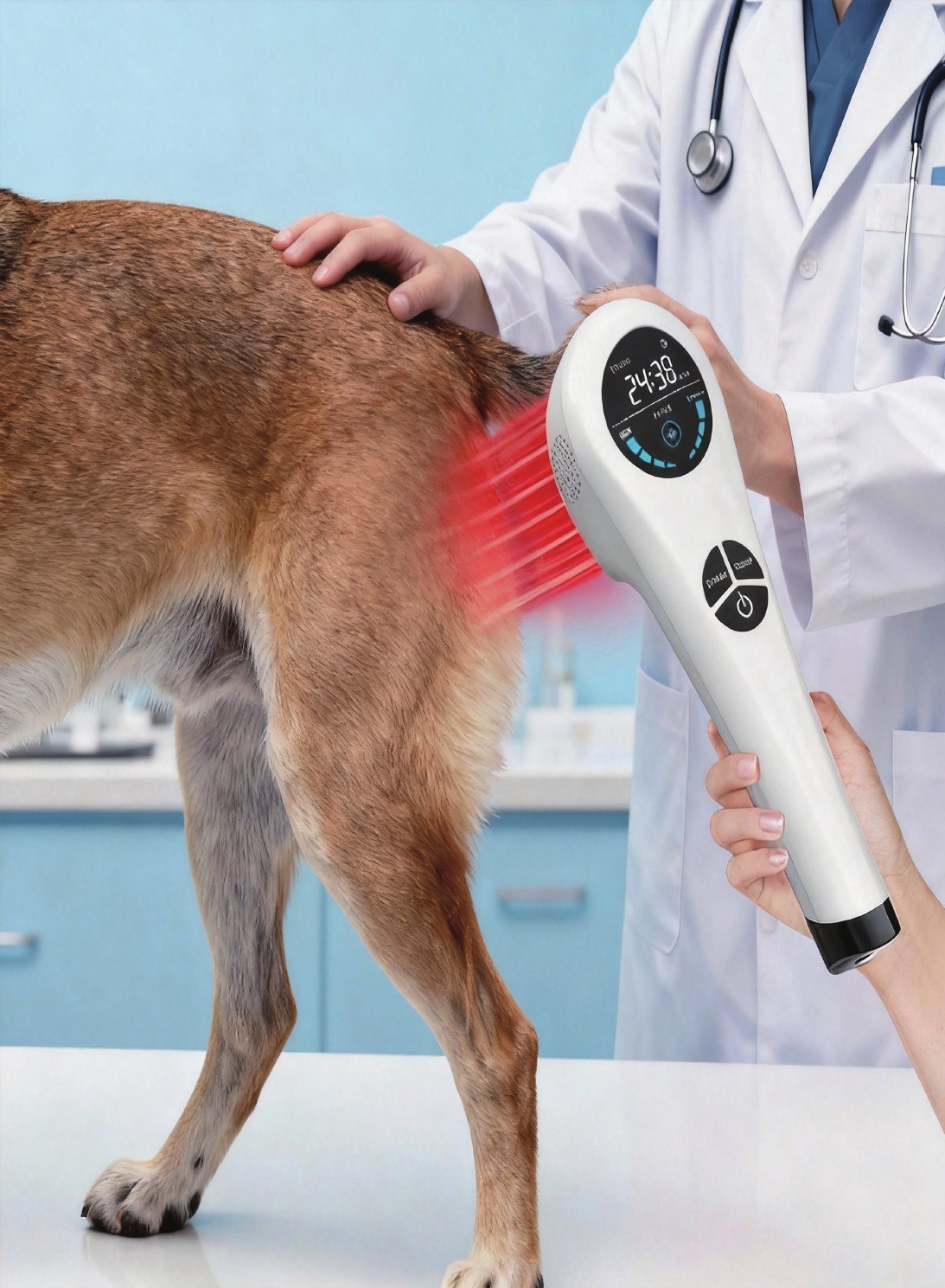
A handheld design gives the operator direct control over positioning. The tradeoff is continuous attention and the need to maintain the intended orientation. Ask evaluators to check grip comfort, button access, cable routing or charging, and whether the display can be read during positioning.
Enclosures: plan the space around the product
An enclosure adds questions about access, observation, internal clearance, ventilation, cable protection and cleaning reach. Check the door opening and usable internal dimensions separately from the external footprint. Define the operating and supervision requirements before treating the enclosure as a ready-made product proposition.
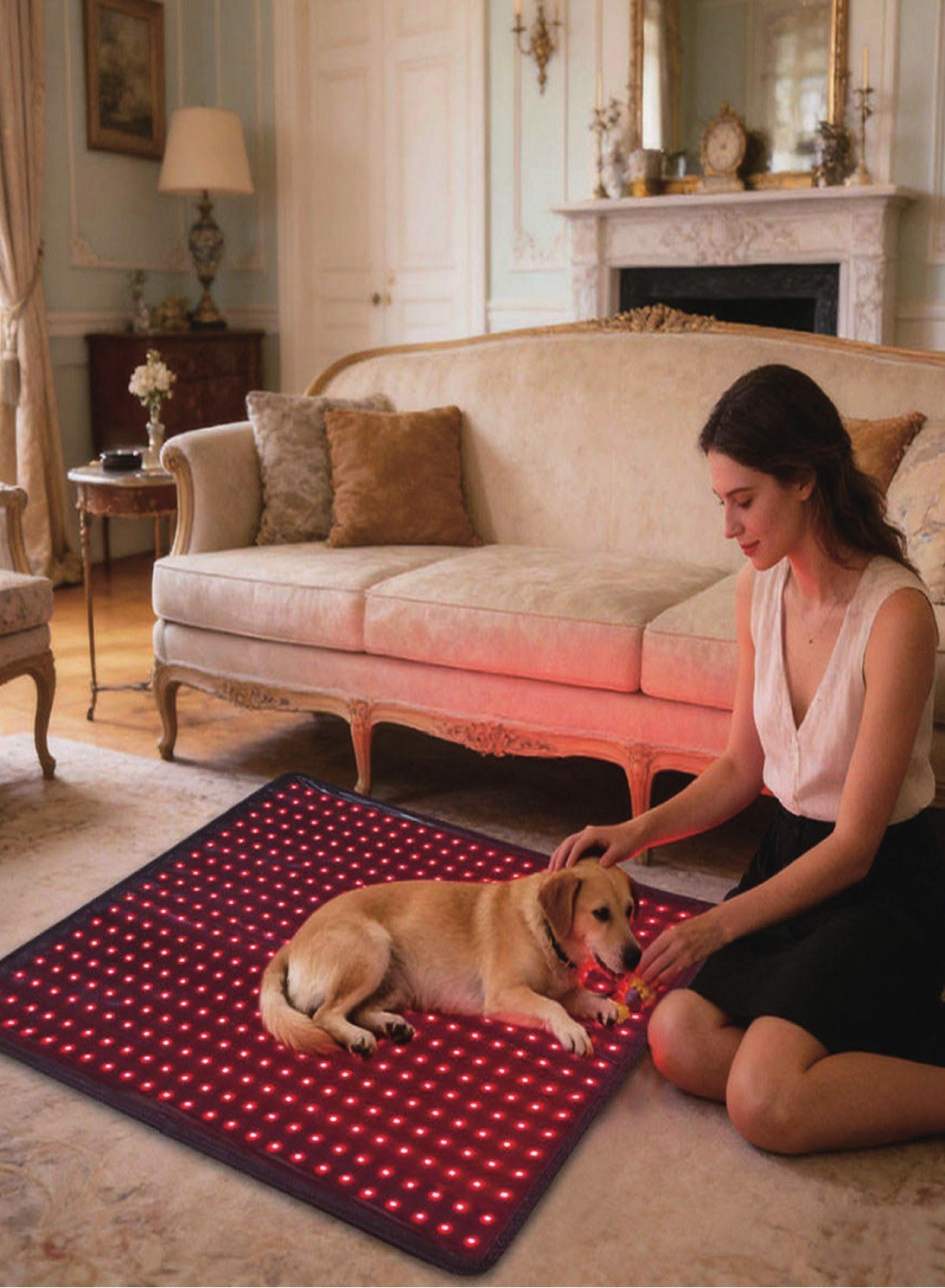
Mats: check more than the flat dimensions
A mat creates an open surface, but the animal's position determines which area is covered. Evaluate edge construction, surface grip, cable exit and the permitted storage method. Do not describe a product as washable, waterproof or resistant to scratching unless that exact construction has supporting evidence.
03 — Cleaning
Make cleaning part of sample approval
Ask for a written cleaning method for every exposed material: the light-facing surface, straps, seams, controller and connector. Specify which parts must be disconnected and how the product should dry before storage. A generic “easy to clean” statement does not tell a buyer which cleaner or process is permitted.
Agree a repeat-cleaning evaluation with the manufacturer. Inspect the sample for discoloration, surface changes, odor, loosening fasteners and damage around connectors, then repeat its functional checks. If a removable cover is proposed, evaluate the complete covered configuration rather than assuming the accessory leaves performance unchanged.
Packaging should support this routine. Keep the instructions accessible and give each accessory an obvious place. Clear identification helps distributors supply the correct replacement controller, strap or adapter later.
04 — Acceptance
Turn specifications into repeatable checks
HSY's knowledge materials describe customization of dimensions, materials, light configurations, controls, branding and packaging. Use those options to resolve a defined handling problem. More modes are useful only when the intended operator can understand and verify them.
- Geometry: confirm finished size, illuminated area, adjustment limits and accessory count.
- Optical specification: record nominal wavelengths, configuration and the agreed output-measurement conditions.
- Controls: check timer behavior, setting changes, indicators and stopping the device.
- Construction: inspect seams, fasteners, connectors, strain relief and storage instructions.
- Documentation: match the model identifier across the sample, label, manual, packaging and supplied reports.
Catalogue figures belong to specific models. Ask for an updated specification sheet for the exact configuration being quoted, especially when changing dimensions, controllers or power supplies. Keep the approved sample and written acceptance criteria together so production inspection has a stable reference.
05 — Buyer questions
Five questions before placing an order
Can one size cover every pet?
Define and evaluate a specific size range. An adjustable strap does not establish universal fit.
Does an illustrated application prove a treatment outcome?
No. Catalogue images show product concepts and positioning. They do not independently establish clinical performance.
Can branding be customized without changing the structure?
HSY describes logo and packaging customization. Confirm the available scope, quantities and sample requirements for the selected model.
Should every model have the same controls?
Use consistent labels where practical, but choose functions around each format's handling routine. Confirm the final control logic separately.
Which documents should accompany the sample?
Request its specification, accessory list, manual, cleaning instructions and available model-specific test records. Agree any additional evidence needed for the intended market and product positioning.
Next step
Send a scenario, then request a sample
Share the intended animal category, size range, operator, environment and handling sequence with HSY. Add your preferred format, target market, quantity, branding and packaging needs. That gives the engineering discussion a practical starting point and makes the sample easier to judge.
Explore HSY's veterinary and equine formats, review the OEM/ODM options, or send a pet-device project brief.
Product-development guidance only. This article does not prescribe animal treatment or establish therapeutic outcomes. Photographs are catalogue illustrations; final specifications and supporting evidence must be confirmed for the selected model.
Source notes: HSY company catalogue, PDF pages 16–20, and company knowledge-base materials on products, applications, customization and quality. Catalogue imagery is reproduced from the supplied PDF.