A red light therapy panel should be compared through a model-specific specification, a measurement plan and an approved sample. Catalogue wattage alone does not describe the light reaching the intended position. For private-label buyers, the useful question is what each number means and how the supplied configuration will be checked.
HSY's product knowledge base includes panels within its health and wellness range, alongside flexible and handheld formats. This guide uses the supplied HSY catalogue to turn panel features into procurement questions. It is a document-based buying guide, with no claim of laboratory testing or clinical evaluation.
01 — Catalogue evidence
Read the specification labels before comparing numbers
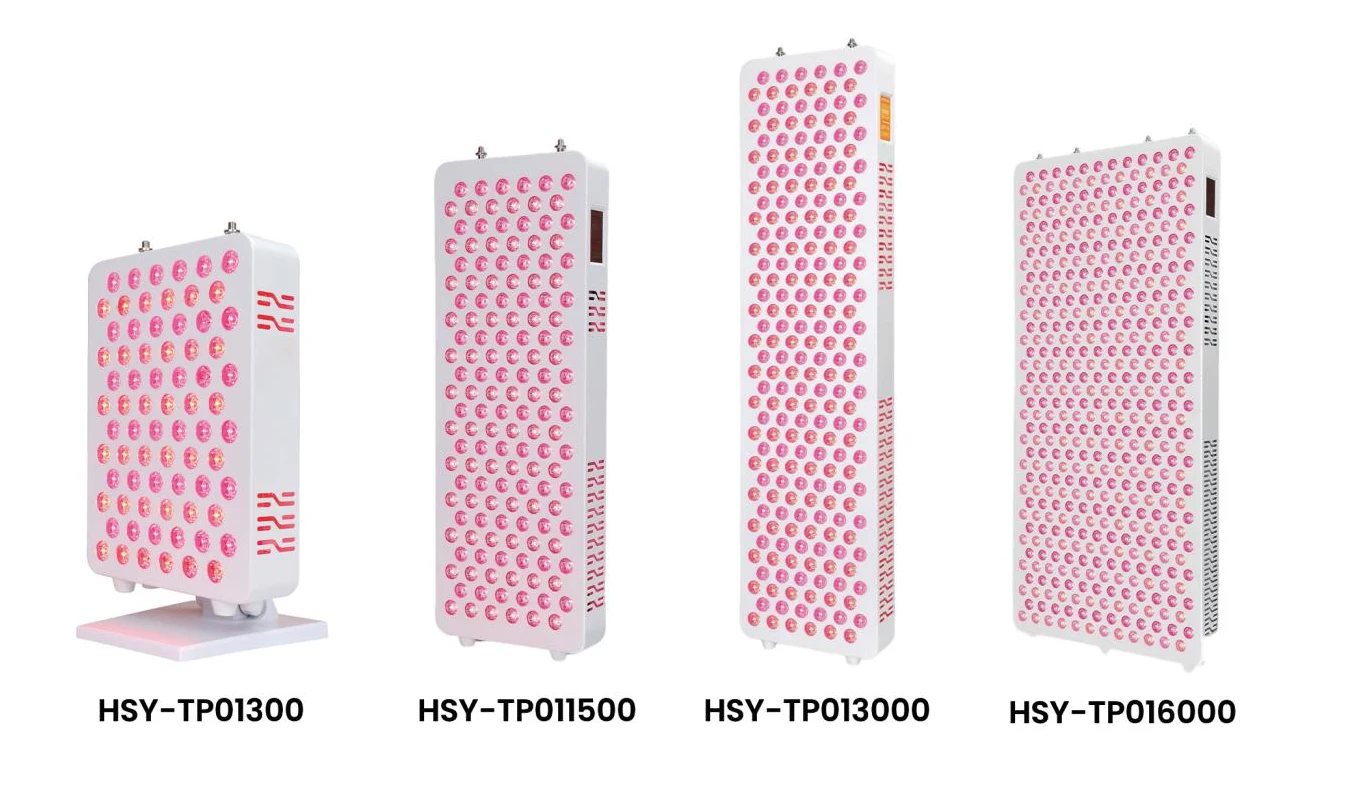
PDF page 6 shows four panel versions. Its “LED Power” row lists 300 W, 1500 W, 3000 W and 6000 W. These are catalogue entries under that exact heading. The page does not provide a measurement method establishing those entries as actual electrical input or optical output, so they should not be used as either without clarification.
The compact HSY-TP01300 entry lists dimensions of 270 × 230 × 65 mm and a weight of 3.5 kg. Treat these as brochure-listed dimensions and mass to confirm against the current drawing and sample. The illustration also shows a base, while the accessories row lists a wall-mounting bracket; confirm which mounting parts accompany the quoted package.
| Quantity | What the buyer should establish |
|---|---|
| Catalogue “LED Power” | The supplier's definition and the model to which the label applies. |
| Electrical input | Measured consumption for the agreed voltage, operating mode and brightness setting. |
| Irradiance | Optical power per unit area at stated positions and distances, using an identified instrument. |
NIST's radiometry overview distinguishes radiant flux in watts from irradiance in watts per square metre. Keep electrical input separately identified as well. A power label cannot substitute for an irradiance report.
02 — Optical requirements
Specify wavelength channels and measurement conditions
The company knowledge materials mention nominal wavelengths including 630, 660, 810, 830 and 850 nm. They also describe customization of light configurations. This does not establish that every panel includes every wavelength or that each channel contributes the same output.
For the proposed model, request a channel list identifying nominal wavelength, LED configuration and available switching combinations. Ask for the spectral report associated with the sample. If a wavelength tolerance or light ratio is quoted, request its definition and measurement basis rather than interpreting an unclear brochure notation.
For irradiance, agree the instrument, calibration information, distance, operating mode and measurement grid. Ask for readings across the intended area, with the centre and edges identified. A single peak reading leaves the distribution unresolved. Keep the recorded settings with the results so another sample can be evaluated under equivalent conditions.
The intended working distance belongs in the product specification and instructions. This article does not select a therapeutic distance, exposure duration or dose. Those decisions require the appropriate evidence and review for the finished product and its intended use.
03 — Installation
Review the panel and its mounting system together
Describe whether the intended package is tabletop, wall-mounted or supplied with another support arrangement. Provide the available space, adjustment needs and cable route. Request a drawing that shows the complete assembly rather than the panel housing alone.
Ask the supplier to identify the bracket, fasteners, support limits and installation instructions relevant to the quoted version. Check how the sample can be positioned, adjusted and secured. Confirm the packaged dimensions and accessory count independently of the device dimensions, especially when comparing shipping proposals.
04 — Controls
Translate advertised functions into sample checks
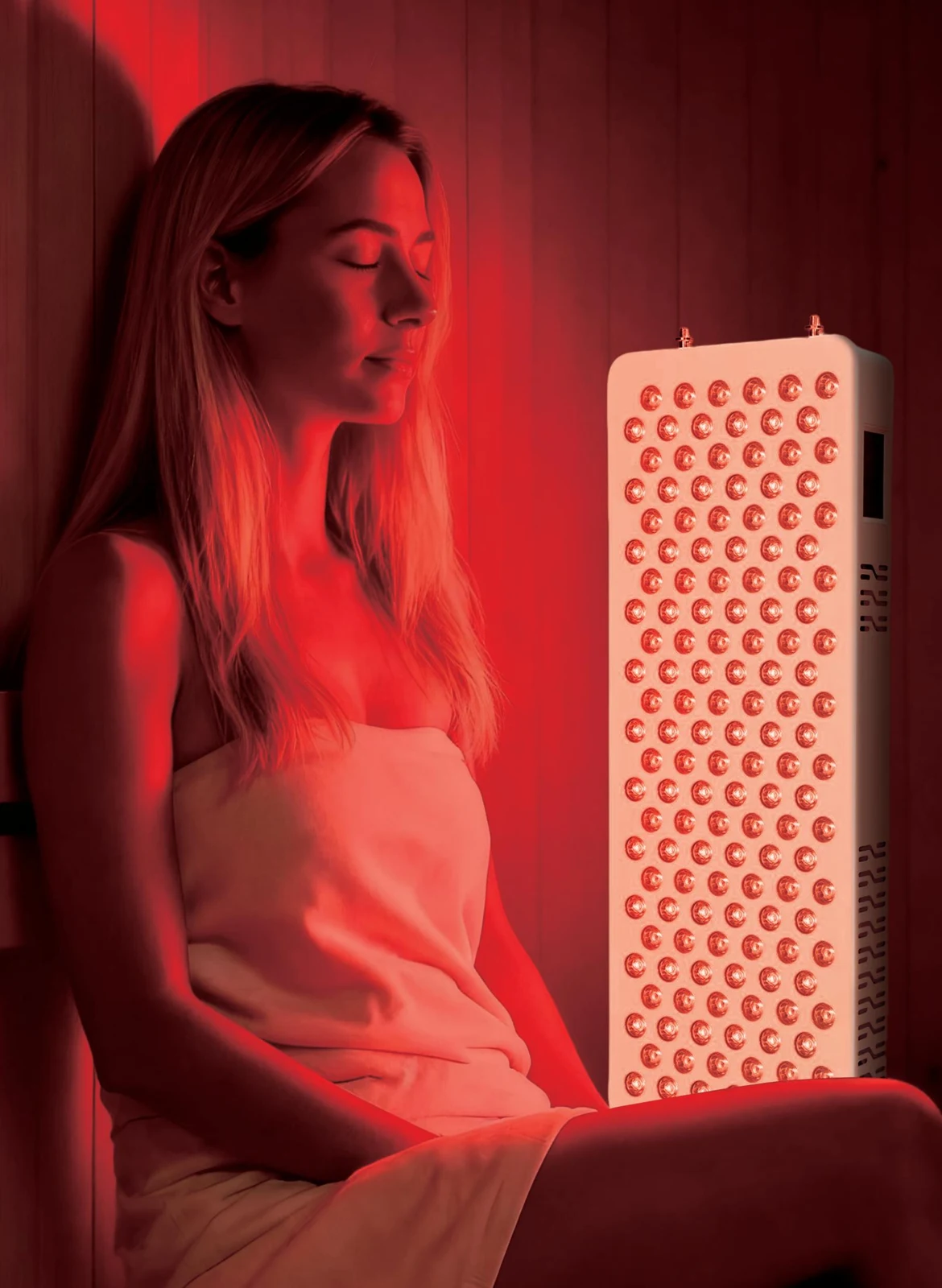
Page 6 lists timer control, wavelength selection, dimming, adjustable frequency, wireless multi-device combination and remote control. Its accessories list includes a remote controller, power cord, goggles, wall-mounting bracket and instruction manual. Confirm these items and functions for the exact version in your quotation.
Create a short test sequence: start the panel, change the selected channels, adjust output, change a timer setting, stop operation and restart. Record the indicated settings and expected behaviour at each step. If multi-device operation is included, identify how panels are paired, addressed and controlled separately or together.
The knowledge base also mentions Bluetooth, Wi-Fi, apps and voice control within HSY's wider customization services. These should be treated as project options to discuss. The presence of those services does not establish that a catalogue panel includes them as standard.
05 — Sample approval
Build an approval file that production can follow
- Identity: model, revision, approved drawings and an identifiable reference sample.
- Optics: channel specification and agreed spectral and irradiance measurement records.
- Electrical and controls: input requirements, measured consumption and functional test sequence.
- Package: mounting hardware, remote, other accessories, labels and manual revision.
- Market documents: reports or authorizations applicable to the exact configuration and intended destination.
HSY's knowledge materials describe sample confirmation, process inspection and final checks. Ask which records will accompany your order. Do not assume that a factory-wide description establishes the inspection duration, warranty or acceptance limit for every SKU.
If your branding, control logic or mounting package changes after sample approval, record the revision and determine which checks need repeating. A stable reference makes the later production discussion more specific than an instruction to supply “the same quality.”
06 — Buyer questions
Questions before confirming a panel order
Does a 300 W catalogue label establish electricity consumption?
Not by itself. Ask how the “LED Power” value is defined and request measured input for the specified operating settings.
Does a wavelength list establish product effectiveness?
No. It describes part of the light configuration. It does not independently establish an outcome, a suitable exposure or the claims permitted for the finished product.
Is the catalogue accessory list enough for ordering?
Use it as a checklist, then confirm the included items, quantities and versions in the quotation and sample-approval file.
Sources and next step
Request a panel specification that can be verified
Send HSY your target market, preferred mounting format, light-channel requirements, control needs, quantity and packaging brief. Review the panel product category, the OEM/ODM options and the quality documentation questions, then request a model-specific proposal.
Product source: the supplied HSY company catalogue, PDF page 6, cross-checked with the company's product, OEM/ODM, quality and source-review knowledge notes. Numerical product entries are manufacturer-listed information, not independent measurements. Images are catalogue illustrations. This article provides procurement guidance and does not prescribe treatment or establish clinical outcomes.